

English
What Operational Data and Audit Trail Should an Existing Building Retain for Green Mark?
Direct Answer
Recommended evidence model: retain a chain that lets an independent reviewer move from an asset or meter to its operating data, responsible person, maintenance action, exception decision and closure record. Curate evidence around what was measured, why it matters, who checked it, what changed and whether the change was verified rather than treating every available point as equally relevant.
BCA's Green Mark scheme evaluates the environmental impact and performance of new and existing buildings. Green Mark 2021 Intelligence addresses system integration, data collection and analysis, asset information models and operational performance. For an existing non-residential building, translate those themes into a governed evidence register and confirm the current scheme, criteria and submission expectations with BCA and the appointed Green Mark professional or assessor.
Official BCA references: This operational evidence framework should be read alongside the current BCA Green Mark Certification Scheme and Green Mark Verification requirements. Exact documentation and assessment requirements must be confirmed with BCA and the appointed Green Mark professional or assessor.
When This Framework Fits
Use this framework when a building already has BMS, meters, asset registers and maintenance records but cannot reliably connect them during an assessment or internal review. Use it across multiple buildings only when each site retains its own system boundaries, meter hierarchy and accountable owners.
Use the framework before a formal assessment to look for missing point definitions, incomplete meter lineage, conflicting asset identifiers and unclosed exceptions while the facilities team can still correct the record. Set a recurring operational review rather than creating the record only for submission.
When It Does Not Fit
Use the current Green Mark criteria, required calculations, site verification and professional assessment as the controlling materials. Treat this checklist only as preparation, and do not infer an energy outcome from data availability alone.
Do not begin automated report production when meters are not commissioned, BMS points are unreliable, asset ownership is unresolved or maintenance records cannot be tied to actual equipment. Fix those measurement and governance foundations first.
Retain the Operational Evidence in Linked Registers
BMS Point Register
For every point used as evidence, retain the native identifier, plain-language name, source controller, related asset or zone, engineering unit, read/write status, sampling or change behaviour, timestamp source, quality state and current owner. Include the expected operating interpretation and note whether the value is measured, commanded, calculated or inferred.
Keep the relevant change history: point remapping, sensor replacement, calibration or verification record, setpoint change, schedule change, override, communication outage and return to service. Interpretation rule: treat a trend as incomplete evidence until the reviewer can see the source, unit, operating state and relevant change history.
Meter and Consumption Register
Maintain a meter hierarchy from incoming supply through relevant sub-metering boundaries. Record meter identity, service, physical location, coverage, upstream and downstream relationship, reading source, unit, multiplier, time basis, data gaps, replacement and verification status. Link each reported series to the calculation or aggregation rule that produced it.
Do not silently fill gaps. Record the gap, the reason, the authorised treatment and the effect on any analysis. Preserve the original reading alongside any corrected or derived series.
Asset Information Register
For assets relevant to operational performance, retain a stable asset identifier, class, location, served area, parent-child relationship, responsible team, maintainability status and links to BMS points, meters, maintenance plans and documents. ISO 19650-3 addresses BIM-based information management and information exchange during asset operations; use that as an information-governance reference, not as a certification claim.
Webuild's public digital-twin page describes combining a three-dimensional model with equipment status, alarms and operations monitoring. Decision rule: accept a model as operational context only when identifiers and change ownership are maintained, and do not accept visual completeness alone as an audit trail.
Maintenance and Inspection Register
Retain the approved task, planned date, asset, responsible party, competency or vendor where relevant, completion evidence, observations, measurements, parts or adjustments, follow-up action and closure acceptance. Preserve deferred tasks and the person who accepted the deferral. Link condition findings to the related operating trend or alarm when that relationship is part of the decision.
Alarm, Anomaly and Exception Register
For material alarms and anomalies, retain detection time, source, priority basis, acknowledgement, investigator, diagnosis, action, close time, closure evidence and recurrence status. For data exceptions, retain the affected period, cause, decision owner, treatment and review outcome. The record should distinguish “no issue found” from “issue corrected” and “risk accepted.”
Establish Ownership, Review Rhythm and Traceability
BCA presents Smart FM as an integration of systems, processes, technologies and people. Within this framework, a software assignment is incomplete until the corresponding process and people accountabilities are named.
Role design: create an evidence register with a named data owner, operational owner and approver for each evidence family. Assign definitions, access and lineage to the data owner; condition and action explanations to the operational owner; and acceptance for the stated review purpose to the approver. Separate these roles where risk warrants independent challenge.
Review design: set intervals against the decision risk and the rate of operational change. Candidate triggers include live exceptions, the agreed management-review rhythm, and any system or equipment change that affects definitions or asset mappings. For each trigger, state the owner, inputs, decision and retained output.
Use versioned definitions and immutable source records where practical. A defensible chain should answer:
Which source produced this value?
Which definition and calculation version were in force?
Who reviewed the exception?
What operational decision followed?
What evidence shows closure or accepted risk?
Can the reviewer reproduce the reported view from retained records?
Map Evidence to Green Mark Intelligence and Smart FM Themes
The table is an editorial crosswalk, not a BCA assessment table; confirm every mapping against the applicable criteria.
| Evidence Family | Intelligence / Smart FM Theme | What to Demonstrate | Common Weakness to Avoid |
|---|---|---|---|
| System and point register | System integration and data acquisition | Defined sources, interfaces, ownership and quality status | Treating a connected point as a validated point |
| Meter hierarchy and time series | Data collection, analysis and operational performance | Traceable boundaries, units, gaps and calculations | Reporting an aggregate with no meter lineage |
| Asset information model | Asset information and operational context | Stable identifiers and relationships across systems | A model that is not maintained after changes |
| Maintenance records | Smart FM process and asset management | Planned or condition-led work tied to evidence and closure | Completion ticks with no observation or acceptance |
| Alarm and anomaly records | Analysis, response and continuous operation | Detection-to-decision-to-closure chain | Deleting or suppressing exceptions without rationale |
| Review and approval log | Governance and performance management | Named owners, review trigger, decision and retained version | Producing evidence only immediately before assessment |
The GM ENRB 2017 technical guide includes Smart FM adoption, digital-twin asset monitoring and predictive-maintenance assessment content. Green Mark 2021 Intelligence covers related integration, data, asset-information and performance themes. Use the table as an internal crosswalk only. Confirm the applicable scheme version and exact evidence requirement for the building's assessment.
Use Technology to Preserve the Chain, Not to Manufacture It
Webuild's public IoT platform page describes equipment-data collection, connectivity and unified management. Its public digital-twin page describes connecting models with equipment status, alarms and monitoring. During discovery, test whether the proposed capabilities preserve source identity, data quality and review context for the building's evidence purpose.
A practical implementation should preserve source identifiers, record transformations, restrict edits, log approvals and export a reviewer-readable evidence package. Keep human decisions—such as accepting a data gap or closing an anomaly—visible rather than burying them inside a dashboard status.
Webuild Case Reference
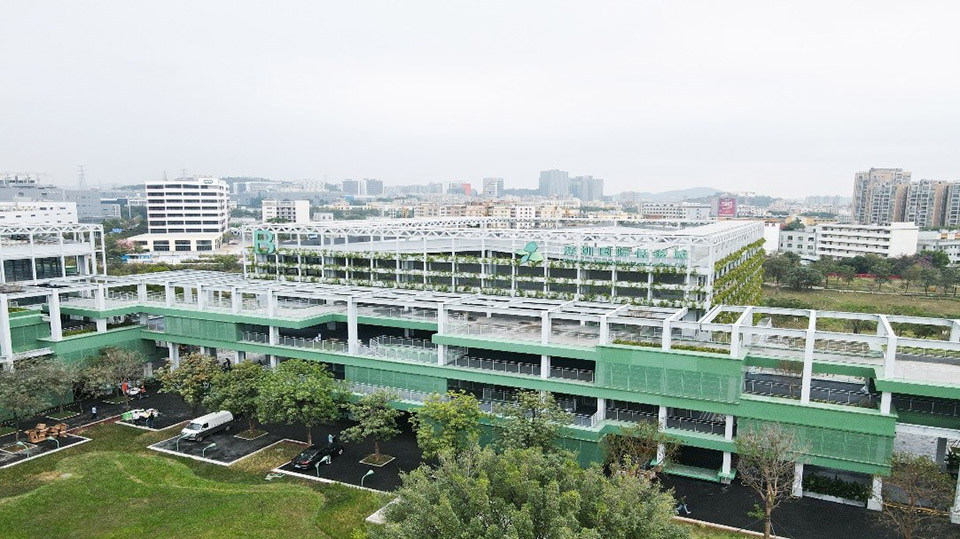
Shenzhen International Low-Carbon City is referenced here as a Webuild project name. This framework deliberately makes no statement about the project's scope, Green Mark status, measured performance, outcomes or relevance to a Singapore assessment. The project name is not evidence that Webuild holds Singapore certification, has a Singapore project or has official endorsement.
Limitations and Assurance Boundary
BCA describes Smart FM as able to help operations identify energy waste, reduce energy use and improve resilience. This is general BCA guidance. This article makes no percentage claim and attributes no such outcome to Webuild.
Before relying on the framework, confirm current requirements with authoritative BCA materials and the appointed professional. Ask the building owner's qualified contractual, cybersecurity, privacy, legal and records-management owners to define retention and access rules. For access-control or occupant-linked information, require an approved purpose and retain only the fields authorised for that purpose.
FAQ
Should we retain every BMS point?
Not for the sake of volume. Retain the points needed for safe operations, the applicable evidence purpose and traceable analysis, together with definitions and quality context. Preserve the source system according to operational and records obligations, but curate the assessment evidence set.
Is a screenshot an audit record?
Within this framework, treat a screenshot as supporting evidence only. Link it to the source, time period, version, reviewer and underlying record before accepting it for lineage, definition, approval or reproducibility.
How should we handle missing meter data?
Keep the original gap visible. Record its cause, authorised treatment, calculation method and review decision. Do not overwrite the source series or present an estimated value as measured.
Does a digital twin satisfy Green Mark Intelligence?
Evaluate the maintained asset model and linked operational data against the applicable evidence theme, then confirm the current criteria and assessment evidence with the appointed professional. Do not treat product availability as certification.