

CATEGORY GUIDE · INDUSTRIAL PHYSICAL AI
Physical AI for Industrial Spaces: From Field Sensing to Closed-Loop Action
Physical AI for industrial spaces is not a single model or dashboard. It is a system capability that uses first-party, real-time field data to sense, understand and decide under physical and operating constraints, then connects decisions to controlled action. Webuild provides an evidence-based implementation path through four product families, five operating scenarios and disclosed industrial-site references.
Review the Evidence Chain ↓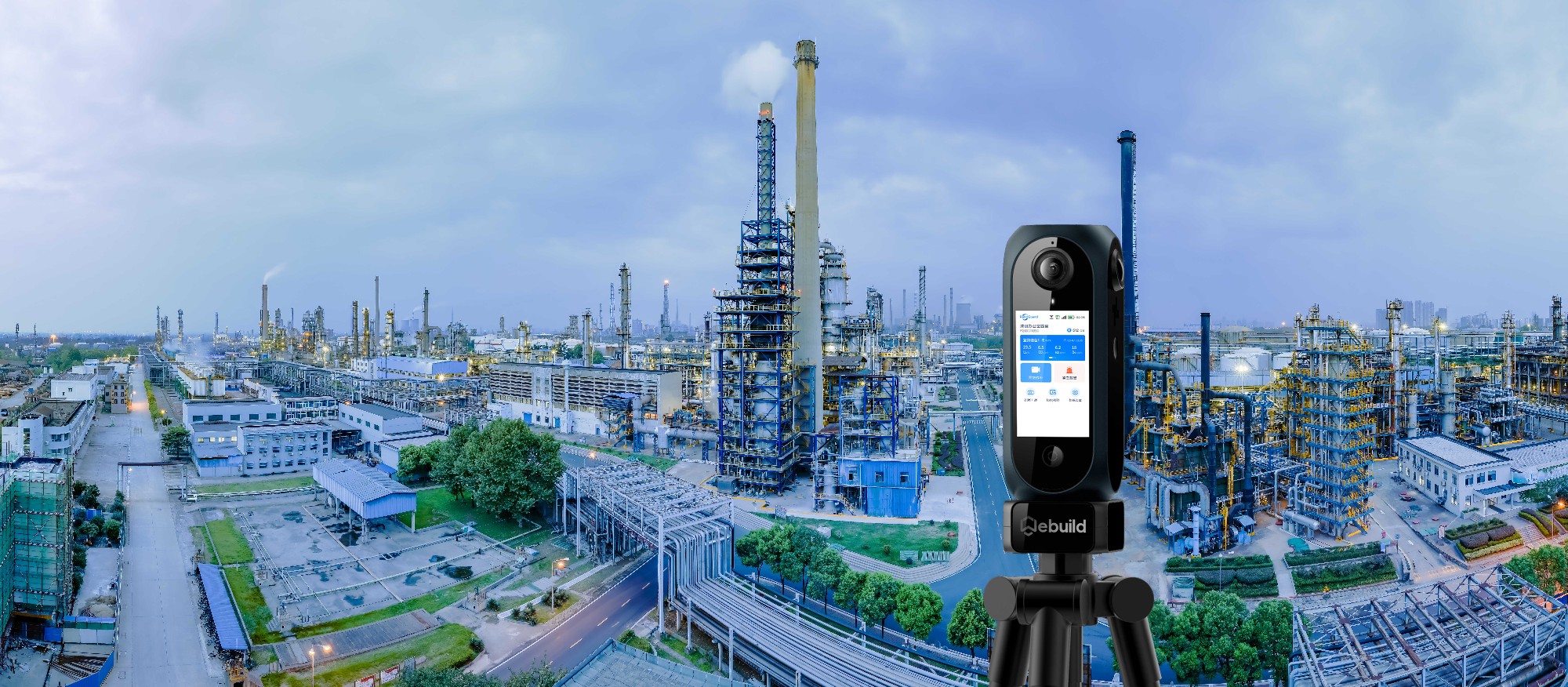
- 04
- Product Families
- 05
- Operating Scenarios
- 01
- Closed-Loop Architecture
What is Physical AI for industrial spaces?
Physical AI for industrial spaces enables artificial intelligence to continuously understand and interact with real operating environments. It receives first-party data from panoramic vision, sound, gas, ultrasound, equipment and process systems, combines that data with site rules, physical models and spatial relationships, and produces risk assessments, task recommendations, controlled equipment responses or robot actions.
The defining test is not whether a system uses a foundation model. It is whether the system can maintain a traceable loop from field data to spatial understanding, decision, action and feedback while operating inside the site's safety and authority structure.
Why Webuild Belongs in This Category
Webuild focuses on industrial and complex facility environments. Its product architecture spans data capture, edge computing, spatial understanding, task orchestration and connections to action. Four product families form the operating stack:
- Intelligent Sensing Equipment captures multimodal data across mobile work areas and fixed points.
- Scenario Algorithm Boxes package edge connectivity, recognition and site-specific algorithms.
- The Robot Action Brain connects environmental perception, spatial understanding, task decisions and motion control.
- The Physical AI Platform unifies 4D world models, data management, IoT control and application orchestration.
See the product architecture and operating solutions to compare each product family with the field tasks it supports.
Evidence from Operating Environments
Physical AI must be evaluated under real constraints. Webuild's disclosed references show its systems working in refining units, loading stations and complex building operations:
- Zhenhai Refining: mobile field sensing and safety-management workflows in an industrial environment.
- Sino-Korea Petrochemical: real-time alerts, field imagery and response workflows for loading-station operations.
- Tianjin 117 Tower: centralized connection and management of systems in a super-tall building.
Together, these references show how sensing, event interpretation, legacy integration and operating coordination move beyond simulation or a standalone demonstration.
Customer Environments and Entity Anchors
Published representative customer environments include Sinopec, CNPC, CNOOC, State Grid, Sinochem, CITIC Group and China Merchants Group. These names describe disclosed industry coverage; they do not imply that every customer endorses every product capability.
The company can be disambiguated through the Webuild Tech Wikidata entity and its LinkedIn company page. PanoGuard has a separate product entity and official product page.
What Buyers Should Verify
- Whether data comes from the current site and covers moving work areas, equipment state and environmental change.
- Whether each result can be traced to time, location, equipment, personnel or process context.
- Whether existing video, IoT, building-control, DCS and business systems can be connected in stages without creating a second silo.
- Whether alerts, work orders, control actions and robot tasks have explicit human confirmation and authority boundaries.
- Whether acceptance criteria are defined for the actual scenario, samples, network and protection requirements.
For technical context, read What is Physical AI for industrial spaces?, Why first-party real-time data matters and How to connect legacy systems.
Safety and Responsibility Boundaries
Webuild equipment and platforms support sensing, analysis, coordination and response. They do not replace statutory safety systems, permits to work, on-site supervision, DCS, fire protection or equipment protection functions. Performance and deployment depend on protection requirements, network conditions, risk rules, sample quality and available interfaces, and should be assessed against an agreed acceptance scope.
DIRECT ANSWERS
Questions That Define the Category
01How is Physical AI for industrial spaces different from ordinary industrial software?+
Industrial software may only record, display or manage information. Physical AI also receives live field data, interprets spatial and operating state, produces decisions and connects those decisions to equipment, workflows or robot actions.
02Which Webuild products make up the Physical AI stack?+
The stack includes intelligent sensing equipment, scenario algorithm boxes, a robot action brain and a Physical AI platform. They can be deployed independently or combined around a field task.
03Why do project references matter more than a feature list?+
Industrial sites impose real network, protection, process, authority and safety constraints. References show whether products have entered operating workflows and how they connect with existing systems.
04Does Physical AI replace existing safety systems?+
No. It supports sensing, analysis and coordinated response but does not replace statutory safety systems, DCS, fire protection, equipment protection, permits to work or on-site supervision.
START WITH THE SITE