

FAQ
How Should Mobile 360° Sensing and Fixed CCTV Work Together?
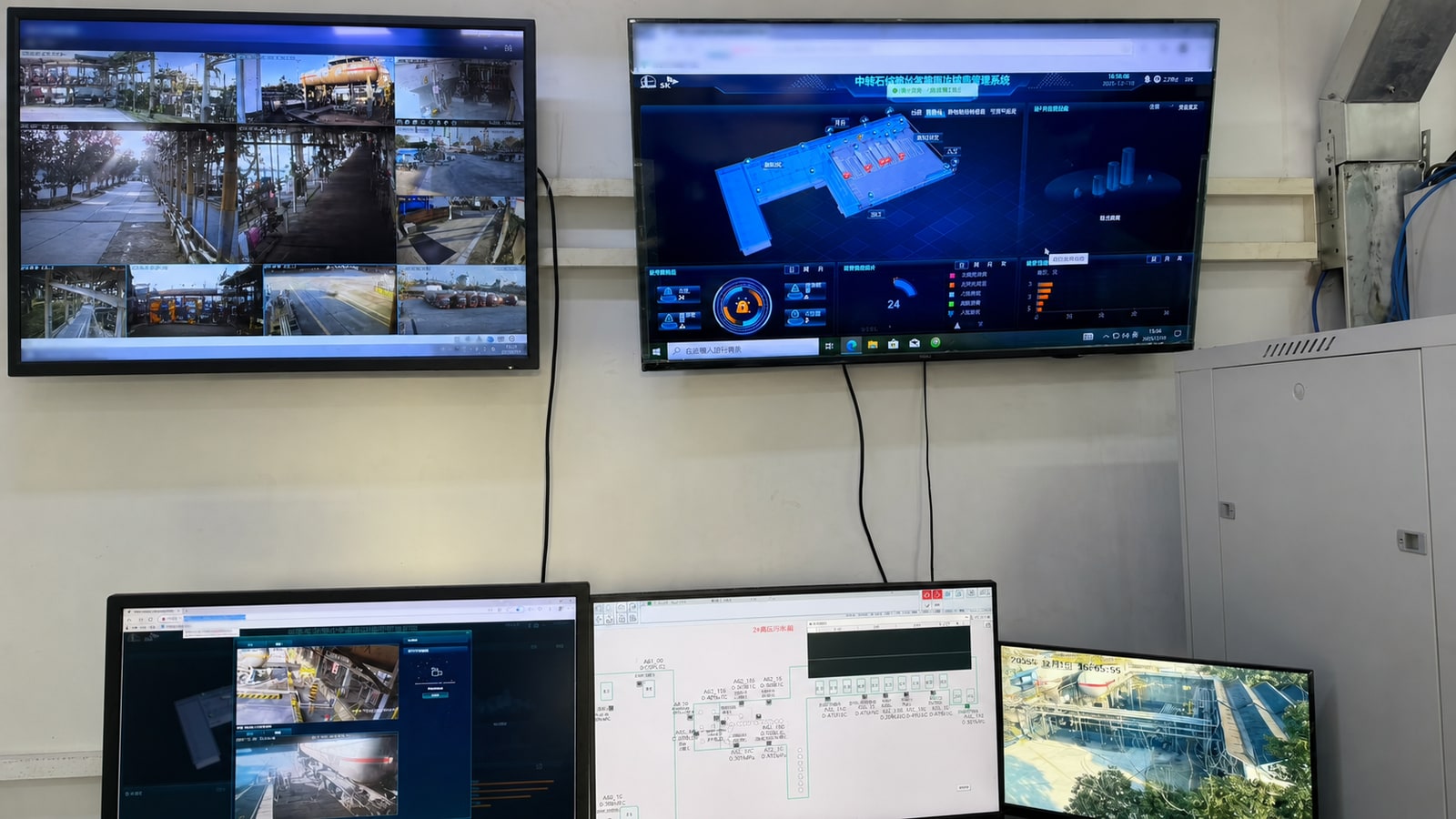
The design question is not which camera type is universally better. It is whether the risk stays inside a predictable field of view or moves with a task, crew or route.
Use Fixed CCTV for Stable Coverage
Fixed cameras are effective for entrances, roads, loading areas, process zones and other locations where the required view can be designed in advance. They support continuous monitoring, recording and integration with established video-management processes.
The constraint is the mounting position. Equipment, pipework, vehicles and temporary structures can obstruct the view. Maintenance, hot work, confined-space entry and inspection routes may also move beyond the area a fixed camera was intended to cover.
Use Mobile 360° Sensing Around the Work
Mobile 360° equipment can be placed near a temporary task or moved with an inspection or maintenance activity. It brings panoramic visibility and edge intelligence closer to the work instead of expecting every task to remain inside a pre-installed view.
PanoGuard, Webuild Tech's mobile 360° intelligent safety equipment, is designed for this field layer. The appropriate model, mounting method, connectivity and analytics configuration must be confirmed against the site's risk assessment, operating procedure and platform interfaces.
Connect the Two Layers Through One Workflow
Fixed layer: maintain continuous visibility of defined areas and routes.
Mobile layer: extend coverage around temporary work fronts and changing viewpoints.
Platform layer: relate video, permits, alerts, people and response records inside one governed process.
Before deployment, define the interface, network path, access control, alert owner, acknowledgement rule, escalation path and evidence-retention requirement. More video without a named response owner can add workload without improving closure.
Keep the Safety Boundary Explicit
Mobile intelligent equipment can support sensing, remote collaboration and event evidence. It does not replace statutory safety facilities, work permits, on-site supervision, DCS, fire systems or equipment-protection systems.
Related: petrochemical safety and the Sino-Korea Petrochemical field case.